FX engine
Rupee vs dollar
₹95.89
Rupee depreciation
109.89%
FY 2000-01 → Live · 25 years · ₹1,00,000 bought $2,188.93 then, $1,042.91 now
- CAGR
- 3.01%
- USD then
- $2,188.93
- USD now
- $1,042.91
Loading rupee calculator…
Data Tools
See how much the rupee has weakened against the dollar, from any financial year to today’s live USD/INR.
FX engine
Rupee vs dollar
109.89%
FY 2000-01 → Live · 25 years · ₹1,00,000 bought $2,188.93 then, $1,042.91 now
Depreciation = (end / start − 1) × 100 · Start = RBI FY average · Latest = live USD/INR
Dollar purchasing power of ₹1,00,000 from FY 2000-01 to Live.
If you had converted ₹1,00,000 to dollars at the start and held cash dollars (no return), it would be worth ₹2,09,886 at the end rate — versus ₹1,00,000 if you stayed in rupees.
USD/INR over your selected period
RBI FY average to live USD/INR
RBI Handbook of Statistics
Live · ₹95.89
Live USD/INR · same as Market Trends
Product
FX exposure and margin intelligence for Indian businesses. Assess USD quotations and manage USD/INR exposure from RBI daily rates.

Commodities
See the shop price in seconds. Gold and silver jewellery with 22K, 24K, making charges and GST.
Commodities
Gold vs silver CAGR, and what ₹1 lakh invested would be worth today.
Finance
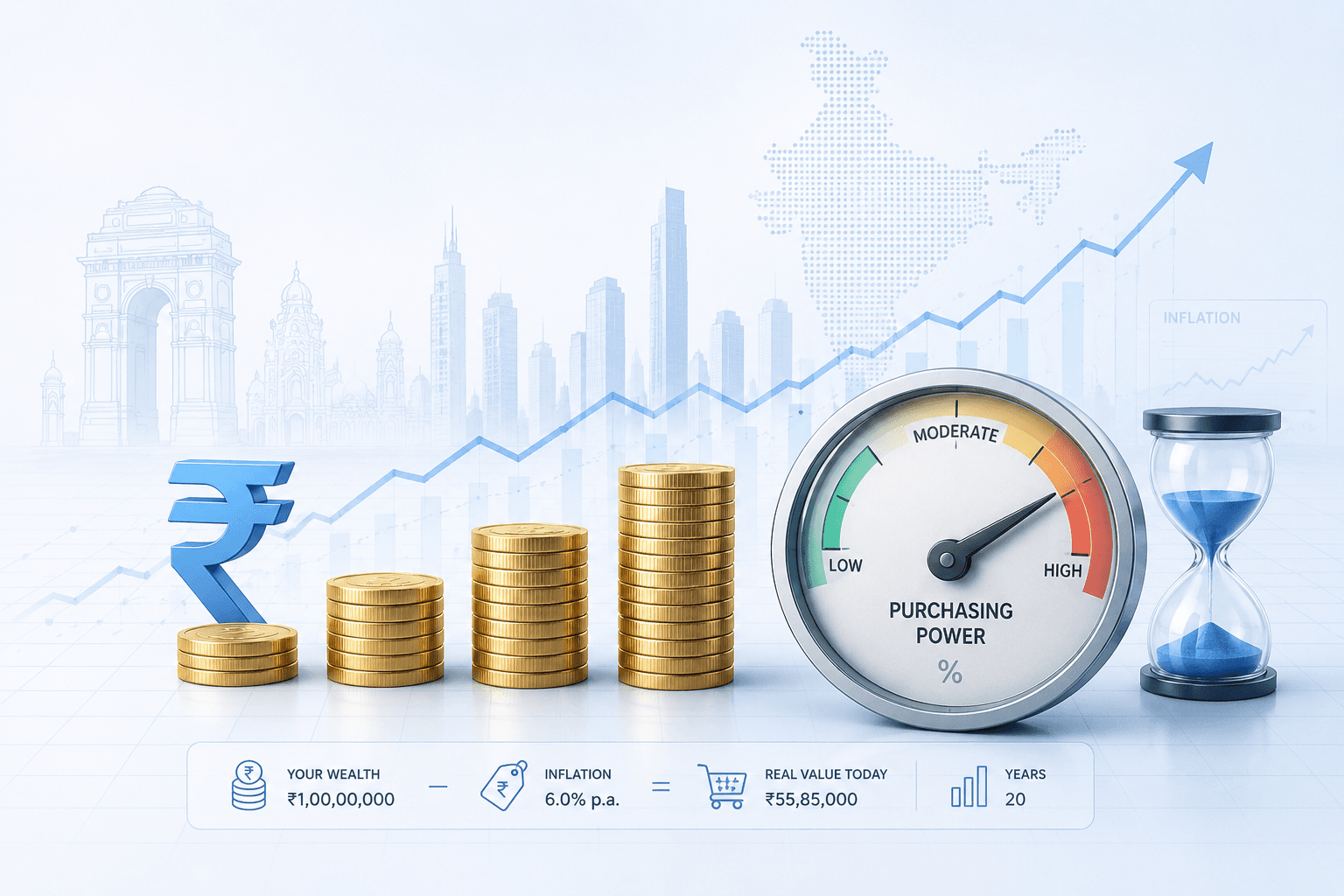
Same rupees in gold, Nifty 50 and a bank FD, valued today.

Energy
Estimate solar plant income per acre and per MW in India, from CUF, tariff and yield.
Start rate is the RBI financial-year average for the year you pick. End rate is either another FY average or the live USD/INR from the same market snapshot as Market Trends and the tools ticker. If live is unavailable, the last monthly average on the USD to INR dataset is used. Depreciation = (EndRate / StartRate − 1) × 100. CAGR = ((EndRate / StartRate)^(1/years) − 1) × 100. Dollar purchasing power is Amount / Rate. “If converted to USD” revalues the start-year dollar amount at the end rate — currency movement only, no investment return.
The Indian rupee’s value relative to the US dollar affects import costs, external debt servicing, and how far Indian savings go abroad. History uses the same RBI Handbook averages as our USD to INR dataset. Latest uses the live USD/INR from Market Trends, the same snapshot that powered the tools ticker.
Total depreciation is the percentage change in ₹ per dollar. CAGR expresses that as an annualised rate. Dollar purchasing power answers a simpler question: if you held a fixed amount in rupees, how many dollars could you buy then versus now? A decline in that dollar amount is rupee depreciation. For inflation-adjusted wealth context, compare this with the Gold vs Nifty vs FD.
The “if converted” figure is opportunity cost in rupees: dollars bought at the start, still sitting as cash, valued at the end rate. It is not an investment recommendation. You can explore more decision tools in the tools library.